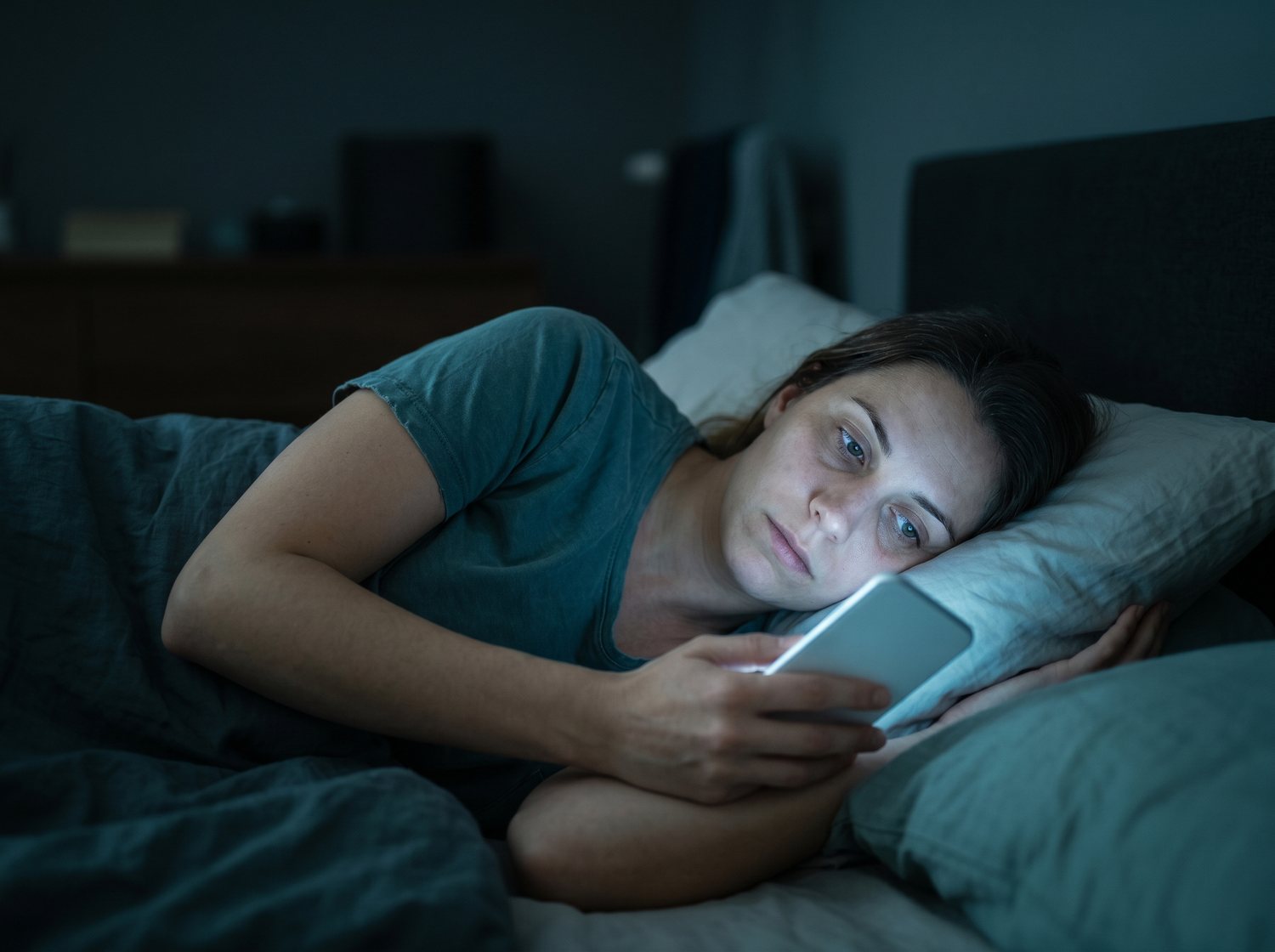
When screens start running the day
Phones, games, social media and streaming are built to hold attention. For many children, teens and adults, use slowly shifts from enjoyable to compulsive: hours disappear, sleep shrinks, schoolwork and relationships suffer, and attempts to cut back end in conflict or irritability. Screen dependency is not usually a diagnosis on its own, but it is a real problem that affects mood, focus and sleep, and it often travels with ADHD, anxiety or depression.
Signs screen use has become a problem
- Use regularly crowds out sleep, homework, work, exercise or time with family
- Strong irritability, anger or meltdowns when screens are limited
- Repeated unsuccessful attempts to cut back
- Gaming or scrolling late into the night
- Withdrawal from offline friends and activities
- Using screens mainly to escape stress, boredom or low mood
Why it matters for mental health
- Sleep. Late-night use delays the body clock and shortens sleep, which worsens mood and attention. See sleep and insomnia.
- Attention. Constant switching and notifications make sustained focus harder. See focus and motivation.
- Mood and anxiety. Heavy social media use is associated with anxiety, low mood and body-image concerns in some young people.
- Underlying conditions. ADHD, anxiety, depression and social difficulties can all drive heavy use as a way of coping. See ADHD and autism support.
How we help
Understanding the role screens play
We look at what screens are doing for the person: relief from boredom or anxiety, social connection, a sense of competence, or escape. That shapes a plan that replaces those needs rather than just removing devices.
A family plan
For children and teens, we work with parents on realistic, consistent limits, screen-free bedrooms, device curfews, and gradually rebuilding offline activities. We help families avoid daily battles by agreeing rules in advance.
Restoring sleep and routine
Shifting devices out of the evening, regular wake times, morning light and physical activity often bring noticeable improvements in mood and focus within weeks.
Treating what sits underneath
If ADHD, anxiety, depression or social difficulties are driving use, treating them directly makes change much easier. See anxiety and depression.
Our providers are licensed naturopathic physicians and mental health counselors led by Dr. Koichi Tanji, ND, LMHC. In Washington, controlled substances such as ADHD stimulants and benzodiazepines are outside naturopathic prescribing scope, so when one is part of the right plan we coordinate with your prescribing physician or nurse practitioner.
Getting started
We see patients in person at 2135 112th Ave NE, Suite 201, Bellevue, and by secure telehealth anywhere in Washington. We are in-network with Premera, Regence, BlueCross BlueShield, Aetna, Cigna and Kaiser PPO. Most people begin with our Biopsych Assessment. Book online or call (425) 278-6166.
If you are in crisis or thinking about harming yourself, call or text 988 (Suicide & Crisis Lifeline) or call 911.